3 hr
Khmer Cooking Class at a Local's Home
Master authentic Cambodian cuisine in a family kitchen after shopping for ingredients at a bustling market
Reserve
Hand-picked by our editors — only the best 5 experiences from 12 reviewed.
Verified partners for every tour, free cancellation where available, and instant confirmation on every booking.
3 hr
Master authentic Cambodian cuisine in a family kitchen after shopping for ingredients at a bustling market
Reserve
3 hr 30 min
Master traditional Khmer dishes in an authentic village setting with expert chefs and local family visits
Reserve
3 hr
Learn to cook authentic Khmer dishes from scratch after browsing a bustling local market
ReservePrices from verified partners. Availability updates in real time at checkout. Free cancellation policies apply where shown.
The landmarks, rooms, and views travelers on this tour remember — all visible on a single visit.
Explore the lush garden where you pick fresh ingredients like lemongrass and galangal.
Walk through a vibrant market to learn about traditional Khmer produce.
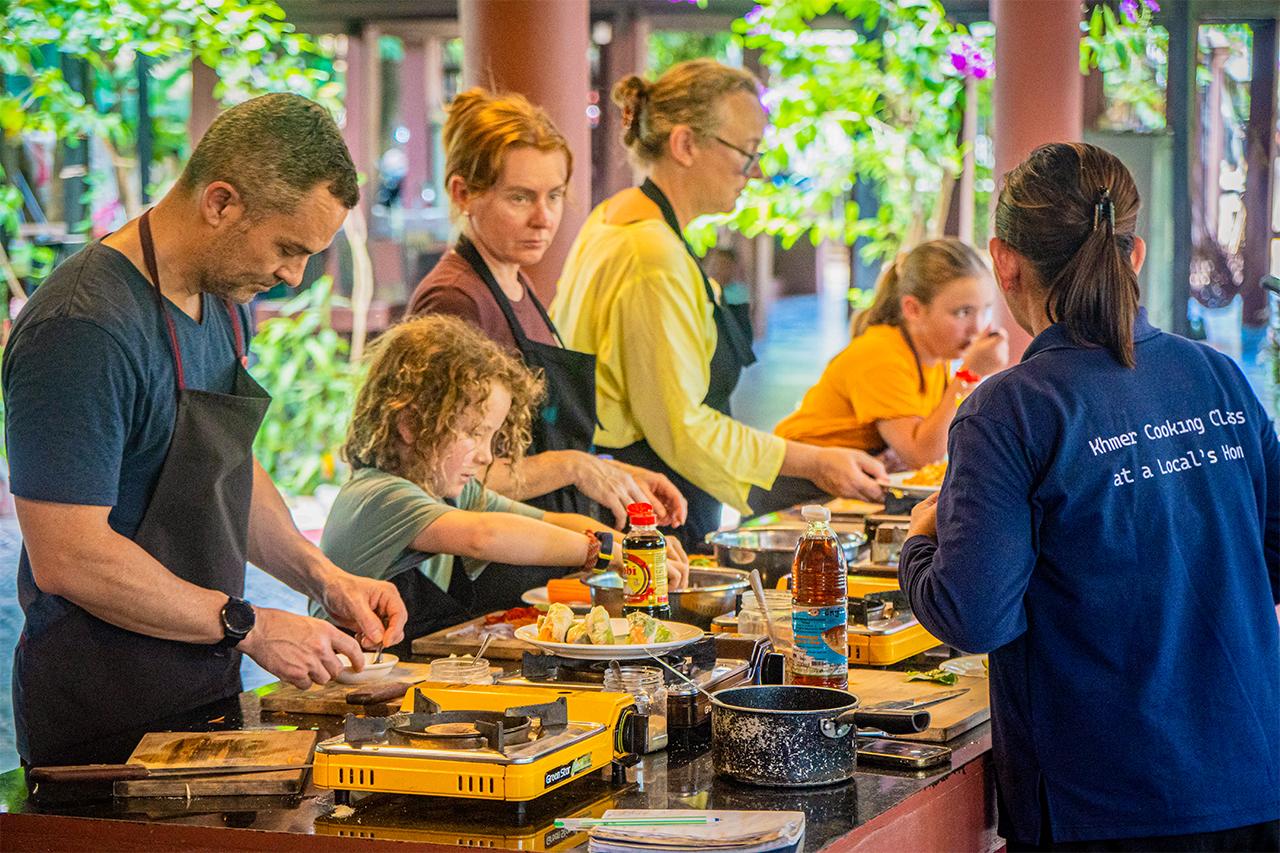
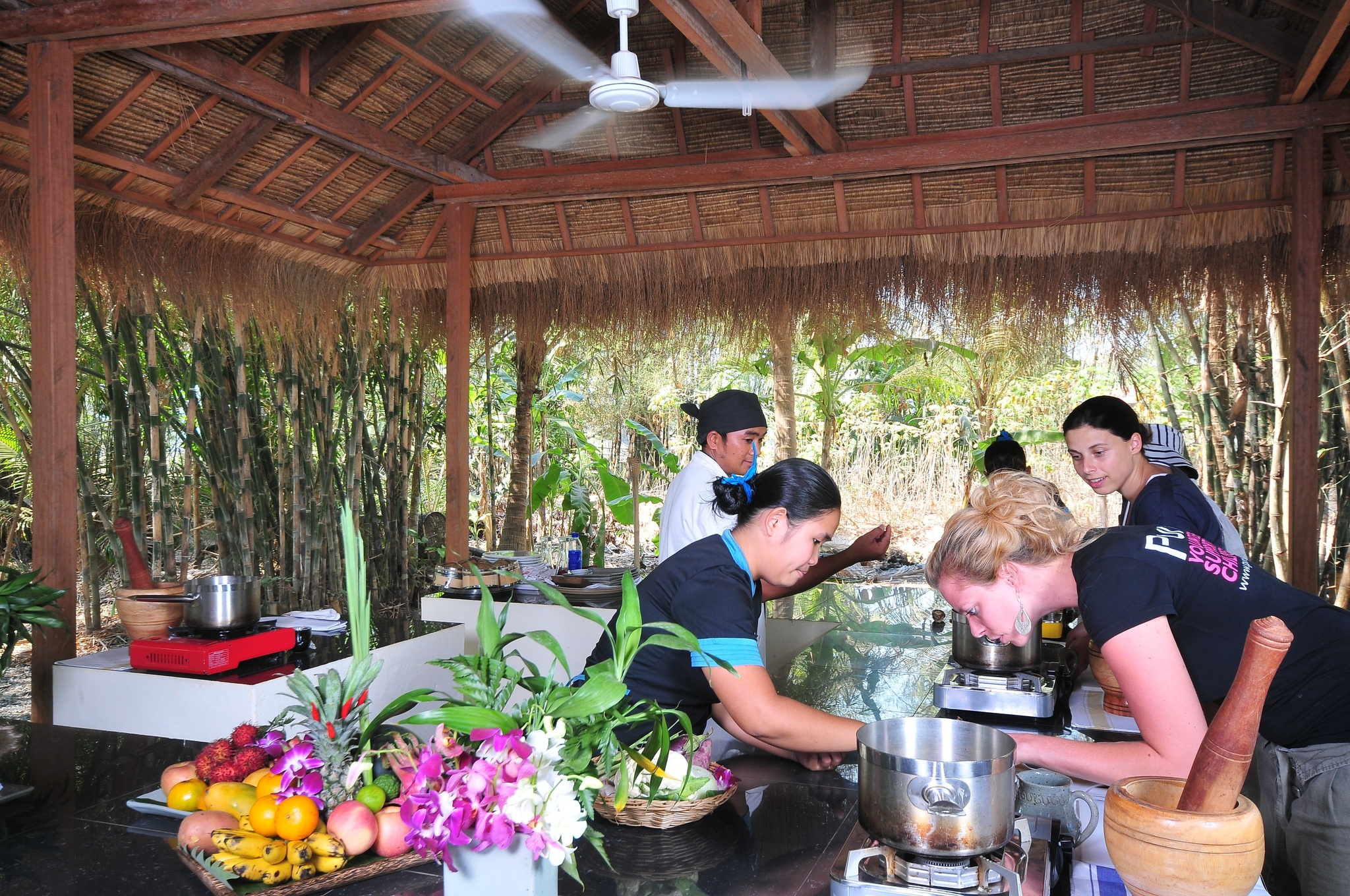
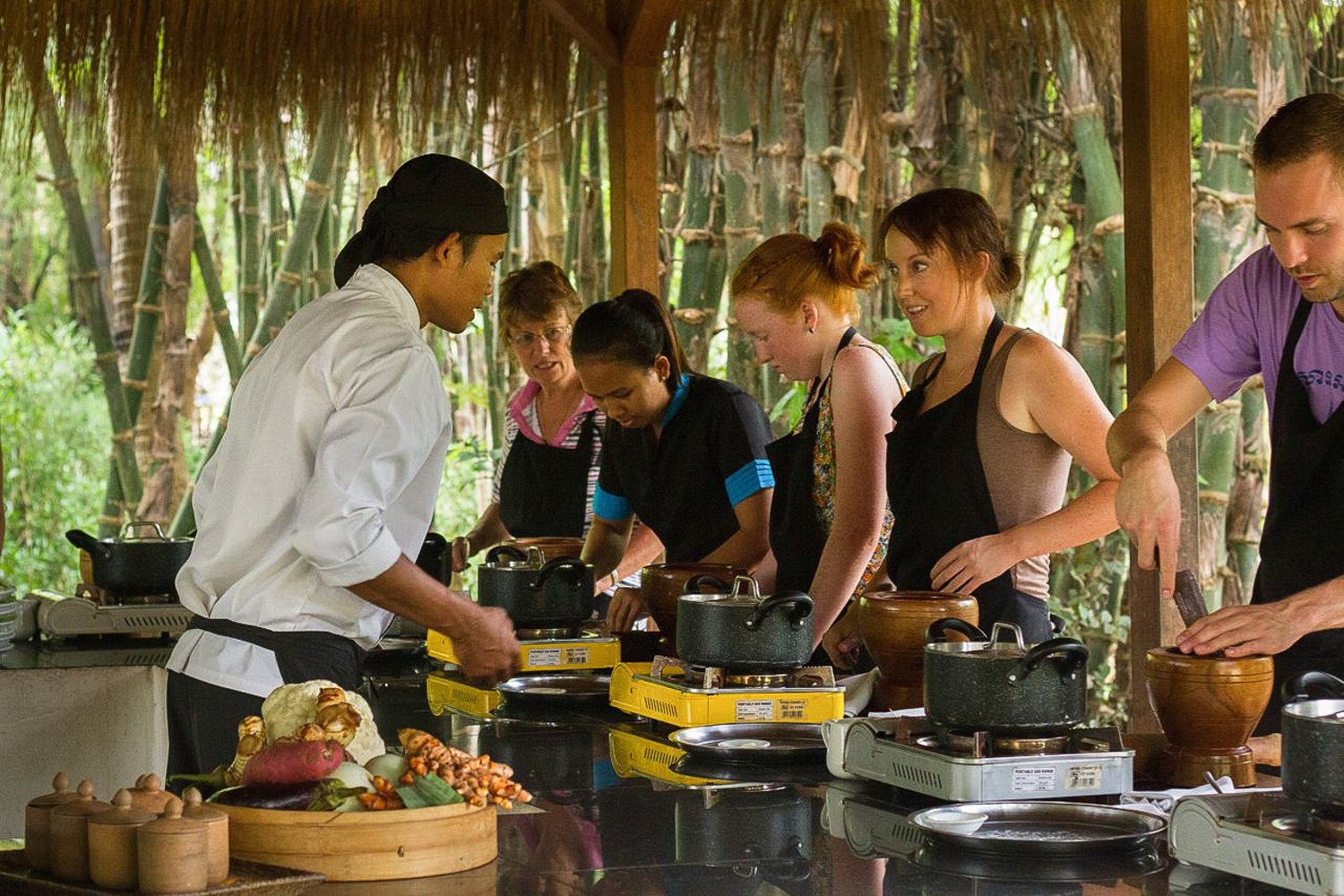
Master authentic recipes in a rustic, open-air pavilion designed for hands-on learning.
Enjoy your meal while overlooking beautiful, serene Cambodian rice fields.
Watch expert local chefs demonstrate the art of balancing Khmer spice profiles.
They complement each other; most visitors who do both find the rural Khmer culinary immersion more grounded, while the urban school provides superior convenience for those staying in the city center. Choosing between countryside cooking class siem reap tours and central facilities depends on whether you prioritize authentic agricultural exposure or time-efficient logistics.
| Feature | Top pick Khmer Cooking Class | In-Town Culinary School |
|---|---|---|
Setting |
Rural Village Location | Urban District Center |
Market Tour Access |
Included with session | Optional local street market |
Transportation Needs |
Private transfer required | Walkable or short tuk-tuk ride |
Cultural Immersion Level |
High via local surroundings | Moderate via instructor guidance |
Complexity of Equipment |
Traditional hearth and wood | Modern gas stoves and gadgets |
Activity Format |
Full-day experience | Modular hour-based sessions |
| See tickets → |
Verdict: If you seek an escape to the Cambodian landscape, the countryside cooking class siem reap tickets offer deeper cultural context, whereas the in-town alternative remains ideal for those limited by tight scheduling or proximity to the city center.
Choose your ticket, select your date, and reserve in under two minutes. Secure checkout handled by our verified partner.
Instant confirmation by email, with a mobile voucher you can save offline. No printing, no queuing at a collection desk.
Arrive at the entrance, show your voucher on your phone, and walk in. Most tickets include priority or skip-the-line access.
Practical details for your visit straight from our verified partners — hours, access, rules, and how to get there.
Siem Reap, Cambodia
Confirmed at booking time
Standard transport provided by the operator for all countryside cooking class siem reap tickets
Wear comfortable, breathable clothing suitable for an outdoor pavilion setting. Avoid overly restrictive garments as you will be active near cooking stations.
Small personal bags can be stored during the class. Large luggage should be left at your hotel.
Photography is encouraged throughout the market tour and cooking session. Capture your culinary creations and the scenic village surroundings.
The rural village location features flat, accessible paths, though terrain can be uneven in garden areas. Please inform staff of specific needs during booking.
Mobile phones are permitted and useful for taking notes on recipes and photos. Ensure they are kept away from active cooking burners.
This countryside cooking class siem reap is family-friendly and welcoming to children. It provides an educational look at Khmer ingredients.
Classes include all ingredients, welcome drinks, and the meal you prepare. Vegetarian and allergy-specific options can be accommodated with prior notice.
No pets are allowed inside the cooking class venue or on market tours. Service animals should be cleared with the operator in advance.
Advance booking is required for all countryside cooking class siem reap sessions. Complimentary tuk-tuk transport is provided from most central hotels.
Best time to go, insider tips, nearby landmarks, and the cancellation fine print — flip through to skim what matters to you.
How crowds, weather, and events shift across the year.
Cooler temperatures and post-rain lushness ideal for countryside cooking class siem reap tours.
Dry and pleasant weather, peak season for all siem reap landmarks.
Hot and dry, best for early morning countryside cooking class siem reap sessions.
Green season offering beautiful views for your countryside cooking class siem reap visit.
Small details that turn a good visit into a great one.
Reserve your countryside cooking class siem reap tickets at least 12 hours in advance to secure a spot.
Inform the provider of dietary restrictions when you book your countryside cooking class siem reap.
Engage with local vendors during the market tour; it is a highlight of the countryside cooking class siem reap.
Bring water and use the provided cold towels during the countryside cooking class siem reap.
Wear light fabrics as the outdoor kitchen can be warm during a countryside cooking class siem reap.
Non-bookable sights within a short walk — free to visit, easy to pair.
Ancient reservoir offering serene views near the class location.
Flexible, no hidden fees.
Full refund if cancelled 48 hours or more before the class. No refund for cancellations less than 48 hours before the class.
Hand-picked options within walking distance — pick a district for vibe, or a specific hotel for convenience.
Charming hotel with dedicated cooking class facilities.
Cambodia's culinary tradition survived the Khmer Rouge years in village kitchens where grandmothers kept recipes alive through oral transmission and muscle memory. Today those same rural compounds open to visitors, their outdoor hearths and banana-leaf steamers serving as living classrooms for techniques unchanged since Angkor's stone carvings depicted court chefs preparing fish amok. The countryside cooking class Siem Reap network operates across a dozen family homesteads beyond the city's temple zone, each compound anchored by a palm-thatched kitchen pavilion and organic herb gardens that supply the day's curriculum. The morning sessions begin at Phsar Leu market, where instructors guide participants through stalls piled with galangal root, kaffir lime leaves, and prahok fermented fish paste. Vendors demonstrate how to select green peppercorns still on the vine and judge the ripeness of small eggplants destined for green curry. This market immersion grounds the cooking class in ingredient knowledge, a foundation that matters when recipes call for specific varieties of basil or the correct firmness of banana blossom. The drive to the village location takes twenty minutes through rice paddies and water buffalo pastures, the landscape shifting from asphalt to laterite roads lined with sugar palms. Each cooking station accommodates four participants maximum, ensuring direct access to the instructor's granite mortar and earthenware pots. The curriculum covers four to five dishes per session: fish amok steamed in banana leaves, green papaya salad pounded with dried shrimp, lemongrass chicken soup fragrant with galangal, and sticky rice cooked in bamboo tubes over charcoal. Techniques taught include paste-making with stone implements, the wrist motion required to flip ingredients in a wok without oil splatter, and the palm-leaf folding method that creates self-contained steaming parcels. These skills reflect Khmer cooking's emphasis on texture and layered preparation, where spice pastes bloom in coconut cream before proteins enter the pan. The culinary heritage preserved in these countryside cooking class Siem Reap sessions extends beyond recipes to agricultural practice and seasonal awareness. Instructors explain which herbs grow in rainy season gardens versus dry months, how palm sugar production synchronizes with the harvest calendar, and why certain dishes appear only during water festivals. This contextual knowledge transforms cooking instruction into cultural transmission, connecting modern visitors to rhythms that have governed Cambodian foodways for centuries.
"Cambodia's culinary tradition survived the Khmer Rouge years in village kitchens where grandmothers kept recipes alive through oral transmission and muscle memory."
A step-by-step walkthrough of the visit — what you'll see, how long each stage takes, and the details that matter.
You meet your instructor at Phsar Leu market at eight in the morning, the aisles already crowded with vendors arranging morning glory bundles and live catfish in plastic tubs. She guides you through produce stalls, pointing out the difference between three types of basil and demonstrating how to smell lemongrass stalks for freshness. You gather ingredients into a woven basket—galangal, kaffir lime, small green eggplants—and sample palm sugar shavings that dissolve sweet and smoky on your tongue. The tuk-tuk ride to the village crosses paddies where egrets stalk between rice shoots. At the family compound you settle onto a low stool at a wooden cooking station shaded by thatch, a granite mortar anchored between your knees. You pound lemongrass and shallots into paste, the instructor correcting your wrist angle until the rhythm feels natural. Chicken pieces sizzle in a clay pot as you add coconut cream and spice paste, the kitchen filling with galangal and turmeric steam. Fish amok comes next, white fish folded into banana leaves with a custard of coconut and kroeung spice paste, the parcels arranged in a bamboo steamer over bubbling water. You eat what you've cooked at a communal table under the house stilts, the amok's texture silky against steamed jasmine rice. The instructor's grandmother joins you, speaking through translation about cooking over wood fires during her childhood. Before you leave she wraps recipe cards in banana leaf, the ingredients listed in both English and Khmer script.
The attraction is open daily from 08:00–18:00. Morning sessions with market tours are available, making it a perfect countryside cooking class siem reap experience.
Yes, the class is family-friendly and educational. Many visitors find the hands-on aspect of a countryside cooking class siem reap ideal for all ages.
Yes, advance booking is essential. You should reserve your countryside cooking class siem reap tickets at least 12 hours before your preferred time slot.
Photography is highly encouraged. It is a fantastic way to document your Khmer Cooking Class experience.
Bring comfortable shoes, sunscreen, a hat, and your smartphone. These will ensure a comfortable countryside cooking class siem reap visit.
The price is 25 USD per person for the join-in cooking class, which covers your ingredients and instruction.
Most bookings include complimentary tuk-tuk pickup from your hotel. Please provide your hotel details to arrange your countryside cooking class siem reap transport.
Yes, vegetarian and allergy-friendly meals are available. Just let the staff know when you book your countryside cooking class siem reap.
You can receive a full refund if you cancel 48 hours or more before the class starts. No refunds are provided for late cancellations.